The Latest Activity of JASPAR Next Generation High-Speed Network WG and Trends of Automotive Ethernet Industry
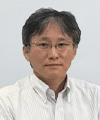
Mr.Hideki Goto
Chairperson of JASPAR Next Generation High-Speed Network WG
JASPAR(Toyota Motor)
Profile
Hideki Goto is the Chairperson of the JASPAR Next Generation High-Speed Network Working Group and works at Toyota Motor Corporation. He has contributed to the standardization of automotive networks, including FlexRay, Bluetooth, and Ethernet, through his activities at JASPAR.
He is also a board member of the OPEN Alliance, a steering committee member of the IEEE Ethernet & IP Automotive Technology Day, a steering committee member of AUTOSAR, and the Chairperson of the Optical Communication Subcommittee of JSAE, actively participating in standardization initiatives for the automotive industry.
The JASPAR (Japan Automotive Software Platform and Architecture) Next Generation High-Speed Network Working Group has been actively advancing the development and standardization of enabling technologies for the integration of Ethernet into vehicles.
In this year’s JASPAR presentations, we will introduce the latest activities of the Working Group and recent industry trends, including JASPAR’s proposals for in-vehicle 10 Mbps Ethernet, the Remote Control Protocol (RCP), and an overview of ongoing international standardization efforts.
|
From Connectivity to Enablement: The Emerging Role of Automotive Ethernet for JASPAR Vehicle APIs
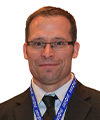
Dr.Takumi Nomura
Vice Chair, JASPAR Next Generation High-Speed Network WG
JASPAR(Honda R&D)
Profile
He joined NEC Communication Systems, Ltd. in 1998, where he engaged in research and development of optical access networks based on Ethernet technologies. Subsequently, he shifted his focus to automotive Ethernet, working on both technical research and international standardization activities. Since 2019, he has held his current position, leading research and development of in-vehicle communication technologies that support next-generation E/E architectures for Software-Defined Vehicles (SDVs).
From 2026, he has served as Chair of the JASPAR Steering Committee, concurrently acting as Vice Chair of the Next Generation High-Speed LAN Working Group. In this role, he is responsible for supporting the development and promotion of the JASPAR Vehicle API, with the aim of defining a “winning strategy” for Japan’s SDV ecosystem.
He is also a Visiting Professor at Nagoya Institute of Technology. He holds a Ph.D. in Engineering.
In recent years, Software Defined Vehicles (SDVs), in which vehicle functionality and value are primarily defined by software, have attracted growing attention. To improve software development efficiency and enable new value creation, JASPAR has developed and released an open-source Vehicle API. The emergence of a software platform that allows unified and flexible access to vehicle-internal and external data is expected to fundamentally change how information is distributed and utilized, leading to a transformation of in-vehicle networks beyond conventional architectures. In this context, the role of in-vehicle Ethernet is no longer limited to data transport, but expands to supporting scalability, openness, and long-term evolvability of vehicle systems. This presentation first examines the societal responsibilities and expectations placed on SDVs, including sustainability, safety, and innovation. It then discusses the new roles that automotive Ethernet must fulfill to support these requirements, considering both technical and architectural perspectives.
|
10M: Challenge of Wiring Constraint Relaxation — Simulation-Based Feasibility Evaluation
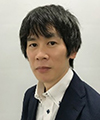
Mr. Kazushi Ueda
Team Leader, 10M Physical Layer Study & Verification Team
JASPAR Next Generation High-Speed Network WG
JASPAR(Mazda Motor)
Profile
Specializing in high-speed digital circuit PCB design and simulation, he is engaged in the design of in-vehicle communication systems, including CAN and Ethernet, at Mazda Motor Corporation. Since 2022, he has been an active member of the Next Generation High-Speed LAN Working Group, primarily contributing to the hardware-focused team. His work focuses on expanding the application of automotive Ethernet and advancing technologies that support next-generation E/E architectures.
As the automotive industry advances toward the realization of Software Defined Vehicles (SDVs) and transitions to zonal E/E architectures, 10BASE T1S is a key technology supporting the Remote Control Protocol (RCP). However, wiring constraints pose challenges for harness design. Within JASPAR, wiring requirements were consolidated based on automotive use cases, and simulation and hardware validation were conducted to achieve CAN equivalent wiring flexibility and the use of low cost cables, assuming a reduced number of nodes.
|
A Key Enabler of In-Vehicle Ethernet — JASPAR’s Efforts Toward Solving Its Challenges
Dr. Rodrigo K. Yamashita
Team Leader, RCP Study and Verification Team
JASPAR Next Generation High-Speed Network WG
JASPAR(Denso)
Profile
Rodrigo Kendy Yamashita completed a doctoral program at the University of Tokyo in 2014 and joined DENSO CORPORATION in 2020. He is currently the leader of the RCP Study and Verification Team in JASPAR’s Next Generation High-Speed Network Working Group and is engaged in studies related to Remote Control Protocol (RCP).
As Software Defined Vehicles (SDVs) evolve, interest is growing in future in-vehicle network architectures, and Remote Control Protocol (RCP) is attracting attention. Within JASPAR’s Next Generation High-Speed LAN Working Group, the RCP Study and Verification Team was launched in April 2026, as a new activity. This presentation introduces the basic concept of RCP and outlines the team’s objectives, including identifying issues for RCP adoption, examining possible solution directions, and taking a broad view of activities that may eventually contribute to future
proposals.
|
Standardization Trend Commentary
Mr.Masato Shiino
Team Leader, Physical Layer Strategy Study Team,
JASPAR Next Generation High-Speed Network WG
JASPAR(Furukawa Electric)
Profile
Masato Shiino is the leader of the Physical Layer Strategy Study Team of the JASPAR Next Generation High-Speed Network Working Group and a Chief Engineer of the Fundamental Technology Laboratory of Furukawa Electric Co., Ltd.
He joined Furukawa Electric Co., Ltd. in 1988. After joining the company, he was mainly engaged in the development of optical connectors and connection products for information and communication and is currently researching and developing communication technology. Additionally, he is a member of JASPAR, IEEE, ISO, JSAE, OPEN Alliance, and the Institute of Electronics, Information and Communication Engineers.
The JASPAR Next Generation High-Speed LAN WG Physical Layer Strategy Study Team is investigating standardization trends in in-vehicle high-speed electrical and optical communications in order to consider the direction of next-generation automotive networks. This presentation will provide an overview of existing high-speed electrical and optical communication standards and the latest status of standardization currently under consideration. We will also report on the results of an experiment on test point evaluation for in-vehicle optical communications that the JASPAR physical layer team conducted last year using a prototype system.
|
Key Enabling Technologies for SDV Architectures
Mr.Chisato Endo
Director, OEM Business Development & Sales
Regional Segment Automotive Japan,
Infineon Technologies Japan
Profile
After conducting R&D on automotive communication technologies at an OEM central research lab, Endo moved into the semiconductor industry. He has held sales and marketing roles at semiconductor manufacturers in Japan, the United States, and Europe. His experience spans vehicle-side engineering and global business, with a focus on in-vehicle networking and product strategy for next-generation automotive systems.
This presentation discusses the key technologies underpinning Software-Defined Vehicles (SDVs), with a focus on next-generation in-vehicle networking. Topics include end-to-end automotive Ethernet—highlighting asymmetric Ethernet per IEEE 802.3dm—along with Ethernet switches and PHYs enabling ring-based network architectures, and support for RCP (Remotely Controlled Plug-in). The talk concludes by outlining Infineon’s approach to designing automotive systems that combine security, functional safety, and high reliability to meet SDV requirements.
|
Evolving SerDes Technologies and Their Impact on Automotive High Speed Test Strategies
Mr. THOMAS STUEBER
Product Manager In-Vehicle Network
Teledyne LeCroy
Profile
Product Manager for In-Vehicle Networks at Teledyne LeCroy, with over twenty years of experience in sales, application engineering, technical product leadership.
He has led the development and deployment of automotive test solutions focused on automotive networks and high-speed serial technologies. Before LeCroy, he spent fifteen years in the test and measurement industry, gaining extensive expertise in oscilloscopes, protocol analysis, and signal integrity troubleshooting.
New SerDes technologies such as ASA-ML, MIPI A-PHY, IEEE802.3dm, and Open GMSL are introducing new challenges in modulation, signal integrity, and compliance testing that differ from traditional automotive bus systems. This presentation summarizes the key SerDes standards and contrasts their physical layer architectures with established Ethernet-based approaches. Also provides what these advanced modulation standards influence to compliance testing and debugging.
|
Standardized SDN for Automotive Ethernet in Scalable SDV
Mr. Soya Saito
Principal Field Applications Engineer
Automotive Connectivity Group
Microchip Technology Japan
Profile
Soya Saito is a Principal Field Applications Engineer at Microchip Technology Japan and a technical leader driving the automotive connectivity group.
He specializes in in vehicle networking, taking a system level view that spans Ethernet, PCIe, and ASA.
Working closely with OEMs, Tier1s, and global teams, he leads architecture level discussions to define robust and scalable vehicle network designs that connect technology strategy with real world implementation.
Software-Defined Vehicles are shifting automotive innovation from hardware to software, requiring scalable and interoperable in-vehicle networks. This presentation explores how standardized Automotive Ethernet abstraction supports this transformation by enabling hardware-independent, Ethernet-based IVNs. It addresses current integration challenges such as vendor lock-in, long development cycles, and limited reuse, and explains how standards-based switch configuration and open control planes, including YANG, improve integration speed, scalability, and multi-supplier interoperability. The session also covers Ethernet expansion to the vehicle edge with 10BASE-T1S, highlighting its role in reducing wiring complexity and cost while supporting future software functions and flexible SDV platforms that scale across vehicle generations.
|
Validating the Multi-Gigabit Frontier: PHY Conformance and Signal Integrity in Automotive Ethernet, ASA Motion Link, and GMSL
Mr. Andreas Ritter
Marketing Application Engineer
Rohde & Schwarz
Profile
Automotive networking specialist with over 10 years of experience in the Test & Measurement industry. Extensive expertise in vehicle communication systems, including Automotive Ethernet, CAN, and legacy business. Global Application Engineer supporting OEMs and Tier 1 suppliers in physical layer compliance and validation. Strong background in physical layer analysis, protocol conformance, timing, and robustness testing. Focused on enabling reliable, high bandwidth vehicle networks for next generation E/E architectures.
The transition to Zoal Architecture is fundamentally restructuring the vehicle's data backbone, with vehicle features that were delivered by complete modules are now delivered by a combination of perception sensors and computing nodes located at different parts of the vehicle. This session will outline key in-vehicle network technologies currently under development and describe specific evaluation methods. These include Automotive Ethernet, Automotive SerDes Alliance Motion Link, and GMSL.
|
Mastering the network challenges of centralization and up-integration
Mr. Günter Sporer
Ethernet Networking Solutions /
Senior Director, Head of Marketing, Systems and Applications
NXP Semiconductors
Profile
Günter Sporer is Senior Director and Head of Marketing, Systems and Application Engineering for NXP’s Ethernet Networking Solutions product segment. He successfully launched NXP’s first automotive Ethernet product families of 100BASE-T1, 10000BASE-T1 PHYs and AVB/TSN switches, and together with his team is responsible for all aspects of defining and positioning NXPs next generation high-speed Ethernet networking solutions. Günter also represents NXP in the OPEN Alliance Board of Directors and the IEEE EIPATD Technical Committee. Before joining NXP Semiconductors in 2013, he held various leadership positions at Texas Instruments with responsibility for automotive power and networking products, 16-bit low-power microcontrollers and where he pioneered TI’s Low-Power DC-DC converter roadmap. He graduated in 1994 with a degree in Electrical Engineering from University of Applied Science (Fachhochschule) Augsburg and University of Missouri in Kansas City.
The latest trend in vehicle architectures are remote control protocol (RCP)-enabled, software-less end nodes. This approach is gaining traction because it enables software-defined vehicle (SDV) capabilities while reducing implementation costs. The key advantage lies in the use of streamlined, standardized protocol bridges that can replace complex electronic control units (ECUs), allowing software clients to be integrated into central high-performance computers (HPCs). The RCP standard is being defined by OPEN Alliance TC18 with the support of many participants of the automotive market: OEMs, TIER1s, TIER2s, etc. In this presentation, we will critically examine which essential building blocks are currently available to address network challenges associated with centralization and up-integration. For instance, we will explore the role of the ultra-high capacity S32J100 Ethernet switch and network controller, as well as the various solutions available to ensure the bounded latency required for software-less end nodes. Through this discussion, attendees will gain practical insights into how these technologies can support the transition toward more efficient and centralized vehicle architectures.
|
Latency with Remote Control Protocol (RCP) and 10BASE-T1S
Mr. Colt Correa
Chief Operating Officer & Vice President
Intrepid Control Systems
Profile
Colt currently serves as Chief Operating Officer at Intrepid Control Systems where he has worked for 20 years. Colt has more than 27 years of experience working on software and electronics hardware with numerous types of vehicle networks including CAN, FlexRay, LIN, MOST, Ethernet and the author of a leading book in this field, now in its second edition, “Automotive Ethernet - The Definitive Guide”. He has also authored numerous IEEE and SAE publications, and has been awarded 6 U.S. patents.
Colt holds a Master of Science in Electrical Engineering from the University of Michigan, where he wrote his thesis on interactive engine and transmission controls
while employed as a controls engineer at Chrysler (Stellantis).
RCP and 10BASE-T1s are emerging as foundational technologies enabling the industry's move toward SDV and central computing architectures bringing new challenges. This presentation will focus on the challenge of end-to-end communication latency with central computing systems when using 10BASE-T1S as an edge node network.
|
|
and more. speakers are coming
|